
Link building is an essential strategy for boosting your website’s visibility and increasing its online authority. But with the rapidly changing digital landscape, it can be challenging to keep up with which strategies will yield the best results. That’s where predictive analytics comes in. By harnessing the power of data and algorithms, predictive analytics can revolutionize your link building efforts, helping you identify the most effective tactics and maximize your website’s potential. In this article, we’ll explore how predictive analytics can take your link building to new heights and drive meaningful results for your online presence.

Understanding Link Building
What is link building?
Link building refers to the process of acquiring hyperlinks from other websites to your own. These hyperlinks, also known as backlinks, are crucial for search engine optimization (SEO) and play a significant role in determining your website’s authority and visibility in search engine results.
Why is link building important?
Link building is essential for several reasons. Firstly, backlinks from reputable and authoritative websites can improve your website’s search engine ranking. When search engines see that your website is being referenced and linked to by other trustworthy sources, they view it as a sign of credibility and quality. This can result in higher organic traffic and better visibility in search results.
Secondly, link building helps drive referral traffic to your website. When users click on a hyperlink to your website on another site, they are directed to your web pages, potentially increasing your website’s visibility and attracting new visitors.
Lastly, link building can also enhance your brand awareness and online presence. By building relationships with other websites and getting them to link to your content, you can expand your reach and tap into new audiences, ultimately leading to more opportunities for engagement and conversions.
Types of link building strategies
Various link building strategies can be employed to acquire backlinks. Some common approaches include:
-
Guest Blogging: Writing and publishing articles on other websites in exchange for backlinks.
-
Broken Link Building: Identifying broken links on other websites and reaching out to the site owner to suggest replacing the broken link with a link to your content.
-
Link Reclamation: Finding mentions of your brand or content online that are not linked and contacting the website owner to request a backlink.
-
Resource Page Link Building: Researching and identifying resource pages related to your industry or niche and reaching out to the website owners to request inclusion of your content as a valuable resource.
-
Content Promotion: Sharing your content on social media and through other marketing channels to increase its visibility and encourage others to link to it.
-
Ego Bait: Creating content that mentions influencers or industry experts and then reaching out to them to let them know they were featured to encourage them to share the content and possibly link back to it.
It’s important to use a combination of these strategies to maximize the effectiveness of your link building efforts.
Introduction to Predictive Analytics
What is predictive analytics?
Predictive analytics is the practice of analyzing historical data to make predictions about future outcomes or events. In the context of link building, predictive analytics involves leveraging data to forecast which websites are most likely to provide valuable backlinks or engage with your content, allowing you to prioritize and optimize your link building activities.
Why is predictive analytics valuable?
Predictive analytics provides a data-driven approach to link building, offering several benefits. By utilizing historical data and statistical models, predictive analytics helps identify patterns and trends that may not be immediately evident, enabling more targeted and strategic decision-making.
With predictive analytics, link builders can gain insights into which websites are most likely to generate the desired outcomes, such as high-quality backlinks or increased referral traffic. This allows them to focus their efforts on the most promising opportunities, saving time and resources.
Furthermore, predictive analytics can help prioritize link building activities based on the potential impact on search engine rankings and organic traffic. By aligning efforts with data-backed predictions, link builders can optimize their strategies and maximize results.
Overall, predictive analytics empowers link builders to make informed decisions, improve efficiency, and increase the effectiveness of their link building campaigns.
Link Building with Predictive Analytics
Benefits of using predictive analytics for link building
Using predictive analytics for link building offers several advantages. Firstly, it allows link builders to make data-driven decisions, reducing reliance on intuition or guesswork. By analyzing historical data and patterns, predictive analytics can identify key factors that contribute to successful link building, helping link builders focus on the most effective strategies.
Secondly, predictive analytics helps identify and prioritize the most valuable link building opportunities. By analyzing data related to website authority, content relevance, and user engagement, predictive analytics can identify websites that are most likely to provide high-quality backlinks. This enables link builders to allocate their resources effectively and maximize the impact of their efforts.
Thirdly, predictive analytics can support ongoing optimization of link building strategies. By continuously analyzing and monitoring data, link builders can adapt their approach based on emerging trends and insights, ensuring that their strategies remain effective and aligned with their goals.
Identifying link building opportunities using predictive analytics
Predictive analytics can assist in identifying potential link building opportunities by analyzing various factors. These factors may include:
-
Website Authority: Predictive analytics can determine the authority and credibility of websites based on metrics such as domain authority, page authority, and backlink profiles. Websites with higher authority are more likely to provide valuable backlinks.
-
Content Relevance: By analyzing keywords, content topics, and user engagement metrics, predictive analytics can identify websites that have a high likelihood of being interested in and linking to your content. This ensures that link building efforts are focused on websites that are most likely to generate relevant and valuable backlinks.
-
Social Signals: Predictive analytics can analyze social media data to identify websites that have a high level of social engagement and influence. Websites with a strong social presence may be more inclined to share and link to your content.
Choosing the right predictive analytics tools for link building
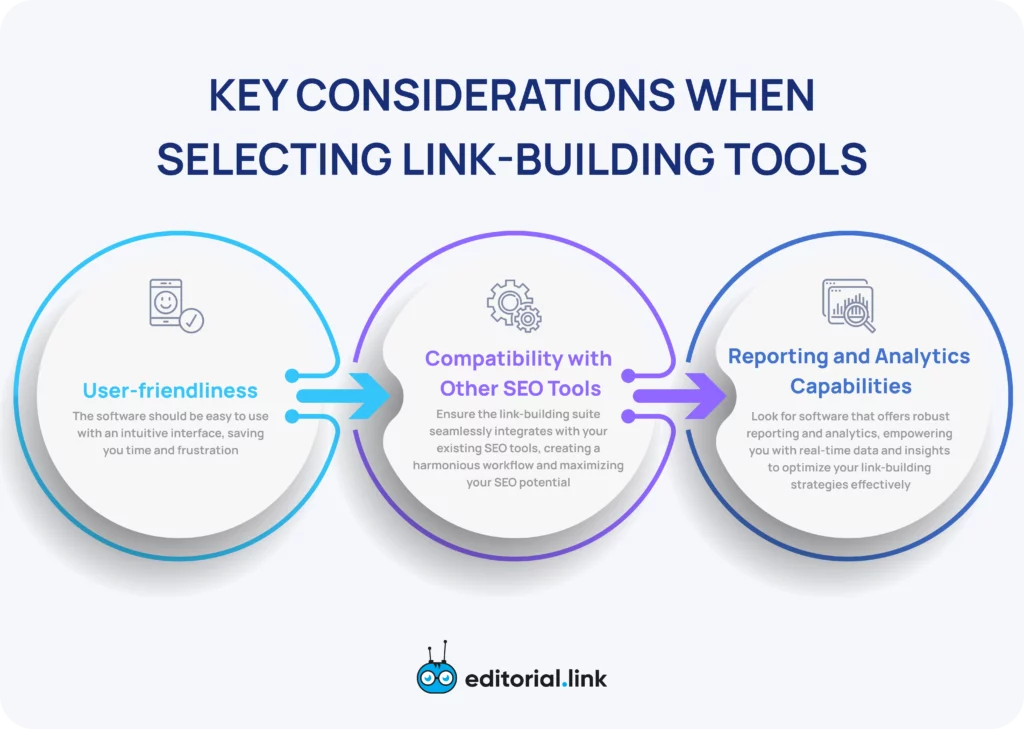
To leverage predictive analytics for link building, it’s crucial to select the right tools. Here are some factors to consider when choosing predictive analytics tools:
-
Data Sources: Ensure that the tool includes relevant data sources for link building analysis, such as backlink data, social media data, and website metrics. The availability and accuracy of data can significantly impact the effectiveness of predictive analytics.
-
Modeling Capabilities: Look for tools that offer robust modeling capabilities, including regression analysis, classification techniques, and clustering algorithms. These modeling techniques can provide valuable insights into link building opportunities and optimize strategies.
-
User-Friendliness: Consider the ease of use and user interface of the predictive analytics tool. A user-friendly tool will allow link builders to efficiently navigate and interpret the data, maximizing their productivity.
-
Integration with Other Tools: Determine if the predictive analytics tool can integrate with other digital marketing tools, such as SEO platforms or content management systems. Integration can streamline workflows and enhance the overall effectiveness of link building campaigns.
Choosing the right predictive analytics tools is essential for unlocking the full potential of data-driven link building.
Data Collection for Predictive Analytics
What data is needed for predictive analytics?
To perform predictive analytics for link building, various types of data are required. Some key data points include:
-
Backlink Data: Access to comprehensive and accurate data on existing backlinks is crucial for analyzing historical patterns and identifying link building opportunities. This data should include information on the linking websites, anchor text, and the authority of the referring domains.
-
Website Metrics: Metrics such as domain authority, page authority, and traffic data are essential for assessing the credibility and potential impact of linking websites. These metrics allow link builders to prioritize their efforts and target websites that are most likely to generate valuable backlinks.
-
Content Relevance Data: Data related to content topics, keywords, and user engagement can help predict which websites are more likely to be interested in linking to your content. This data can be analyzed to identify websites that align well with your content and have a higher probability of providing backlinks.
-
Social Media Data: Social signals, such as the number of shares, likes, and comments on social media platforms, can indicate websites with a strong social presence. Analyzing these social media data points can help identify websites that are more likely to engage with and link to your content.
Sources for collecting link building data
To collect the necessary data for predictive analytics in link building, a combination of tools and sources can be utilized. Some commonly used sources include:
-
SEO Platforms: SEO platforms like Moz, SEMrush, and Ahrefs provide comprehensive backlink data, website metrics, and competitive analysis, allowing link builders to gather relevant information for predictive analytics.
-
Web Analytics Tools: Tools like Google Analytics can provide valuable data on website traffic, user engagement, and audience behavior. This data can be integrated into predictive analytics models to enhance their accuracy.
-
Social Media Analytics Tools: Social media management platforms and analytics tools like Buffer and Sprout Social can provide insights into social engagement and influence. These data points can be valuable in predicting websites with a high likelihood of engaging and linking to your content.
-
Custom Data Collection: Link builders can also collect their own data through surveys, interviews, or web scraping. These custom data collection methods can help gather specific information relevant to their link building strategies and goals.
It’s important to ensure that the collected data is accurate, up-to-date, and relevant to the specific objectives of the predictive analytics project.

Data Analysis and Modeling
Data cleaning and preparation
Before performing predictive analytics, the collected data needs to be cleaned and prepared. The data cleaning process involves removing duplicates, handling missing values, and resolving inconsistencies or errors. This ensures that the data is accurate and reliable for analysis.
After cleaning the data, it needs to be transformed and formatted appropriately for modeling. This may involve converting categorical variables into numerical representations, normalizing or standardizing numerical variables, and splitting the data into training and testing sets.
Data preparation is a critical step in predictive analytics as the quality and reliability of the results depend on the cleanliness and suitability of the data.
Exploratory data analysis
Once the data is cleaned and prepared, exploratory data analysis (EDA) can be performed. EDA involves visually analyzing the data, identifying patterns, correlations, and outliers, and gaining a deeper understanding of the dataset.
During EDA, various statistical techniques, such as descriptive statistics and data visualization, can be utilized to uncover insights and identify potential relationships between variables. These insights can inform the development of predictive models and help guide link building strategies.
Exploratory data analysis is an iterative process, often involving multiple rounds of analysis and refinement to gain a comprehensive understanding of the data.
Developing predictive models for link building
After conducting exploratory data analysis, predictive models can be developed to forecast link building outcomes and identify valuable opportunities. Several modeling techniques can be applied, depending on the specific objectives and data available:
-
Regression Analysis: Regression analysis can be used to predict link popularity metrics, such as the number of backlinks or the authority of linking domains. By identifying variables that have a significant impact on link popularity, regression models can provide insights into the factors that contribute to link building success.
-
Classification Techniques: Classification techniques, such as decision trees or logistic regression, can be employed to identify websites that are most likely to provide high-quality backlinks. These models use historical data to classify websites into categories, allowing link builders to prioritize their efforts on the most fruitful prospects.
-
Clustering: Clustering techniques can group websites based on similarities in terms of content relevance, website authority, or previous link building behavior. This helps identify target audiences or segments for outreach, ensuring that link building efforts are focused and tailored to specific groups.
Developing predictive models involves training the models using historical data, validating their performance, and fine-tuning them to optimize their predictive capabilities. It’s important to regularly update and refine the models as new data becomes available to ensure continued accuracy and effectiveness.
Predictive Analytics Techniques for Link Building
Regression analysis for predicting link popularity
Regression analysis is a powerful technique for predicting link popularity metrics. By analyzing historical data on factors such as content quality, website authority, and marketing efforts, regression models can estimate the number of backlinks or the authority of linking domains that a website is likely to achieve.
To perform regression analysis for link building, several steps need to be followed:
-
Data Preparation: Clean and preprocess the data, ensuring that it is suitable for regression analysis. This may involve handling missing values, transforming variables, and normalizing data if necessary.
-
Feature Selection: Identify variables that show a strong correlation with the link popularity metric of interest. This can be done through statistical techniques such as correlation analysis or feature importance analysis.
-
Model Development: Build a regression model using the selected features and the link popularity metric as the dependent variable. This model can be developed using techniques such as linear regression, polynomial regression, or ridge regression.
-
Model Evaluation: Validate the regression model’s performance using evaluation metrics such as R-squared, root-mean-square error, or mean absolute error. Adjust the model if necessary to improve its predictive capabilities.
By utilizing regression analysis, link builders can gain insights into the factors that contribute to link popularity and optimize their strategies accordingly.
Classification techniques for identifying high-quality link prospects
Classification techniques can help identify high-quality link prospects by categorizing websites based on their likelihood of providing valuable backlinks. This allows link builders to prioritize their outreach efforts and focus on the most promising opportunities.
To apply classification techniques for link building, the following steps can be followed:
-
Data Preparation: Clean and preprocess the data, ensuring that it is suitable for classification analysis. This may involve handling missing values, transforming variables, and encoding categorical variables if necessary.
-
Feature Selection: Identify features that are indicative of high-quality link prospects. These features may include website authority, content relevance, social media engagement, or historical link building behavior.
-
Model Development: Train a classification model, such as a decision tree, logistic regression, or random forest, using the selected features and a binary variable indicating whether a website is considered a high-quality link prospect or not.
-
Model Evaluation: Assess the classification model’s performance using evaluation metrics such as accuracy, precision, recall, or F1 score. Adjust the model if necessary to improve its predictive capabilities.
By applying classification techniques, link builders can streamline their outreach efforts and focus on websites that have a higher probability of providing valuable backlinks.
Clustering for link building outreach
Clustering techniques can aid in grouping websites based on similarities, allowing link builders to tailor their outreach strategies to specific target audiences. By identifying clusters of websites with similar content relevance, website authority, or link building behavior, link builders can optimize their outreach efforts and increase the likelihood of obtaining backlinks.
To leverage clustering techniques for link building outreach, the following steps can be followed:
-
Data Preparation: Clean and preprocess the data, ensuring that it is suitable for clustering analysis. This may involve handling missing values, transforming variables, and normalizing data if necessary.
-
Feature Selection: Select features that capture relevant aspects of website similarity, such as content topics, keyword usage, domain authority, or historical link building patterns.
-
Model Development: Apply clustering algorithms, such as k-means clustering or hierarchical clustering, to group websites based on similarity. The number of clusters can be determined using techniques such as the elbow method or silhouette analysis.
-
Cluster Profiling: Analyze the characteristics and attributes of each cluster to gain insights into the characteristics of websites within each group. This helps guide outreach strategies and tailor them to the preferences and needs of each cluster.
Clustering can enhance link building outreach by allowing link builders to personalize their approaches and engage with websites that are more receptive to their content and offerings.

Link Building Optimization
Applying predictive analytics insights to optimize link building strategies
Applying predictive analytics insights can help optimize link building strategies by focusing efforts on the most promising opportunities and prioritizing activities that yield the highest return on investment (ROI). Here are some ways to optimize link building strategies using predictive analytics:
-
Targeted Outreach: Utilize predictive analytics insights to identify websites that are most likely to engage with and link to your content. By focusing outreach efforts on these websites, link builders can maximize their chances of obtaining high-quality backlinks.
-
Content Optimization: Use predictive analytics to analyze historical data and identify content attributes, such as topic relevance or format, that contribute to successful link building. Optimize content creation and promotion strategies based on these insights to improve the chances of attracting backlinks.
-
Resource Allocation: Predictive analytics can help allocate resources effectively by identifying link building activities or strategies that are likely to yield the highest ROI. By prioritizing activities with a higher probability of success, link builders can optimize their resource allocation and maximize their impact.
-
Continuous Improvement: Regularly update and refine predictive analytics models based on new data and emerging trends. This ensures that link building strategies remain effective and aligned with changing market dynamics.
By leveraging predictive analytics insights, link builders can optimize their strategies, increase efficiency, and improve the overall effectiveness of their link building campaigns.
Measuring success and ROI of link building campaigns
Measuring the success and ROI of link building campaigns is crucial to evaluate their effectiveness and make data-driven decisions for future strategies. Here are some key metrics to consider:
-
Number of Backlinks: Track the number of acquired backlinks to assess the success of link building efforts. A higher number of quality backlinks indicates increased visibility and potential for improved search engine rankings.
-
Website Authority: Monitor changes in website authority metrics, such as domain authority or page authority, to assess the impact of link building on improving the overall credibility and visibility of your website.
-
Referral Traffic: Analyze the amount of referral traffic generated from backlinks to measure the effectiveness of link building in driving visitors to your website. Increased referral traffic indicates greater engagement and potential conversions.
-
Conversion Rates: Monitor the conversion rates of visitors referred from backlinks to evaluate the quality and relevance of the acquired traffic. A higher conversion rate indicates the effectiveness of link building in attracting a targeted audience.
-
Return on Investment (ROI): Calculate the ROI of link building campaigns by comparing the cost of acquisition (including time and resources spent on link building activities) to the value generated from increased visibility, organic traffic, and conversions.
By regularly tracking and analyzing these metrics, link builders can assess the success of their link building campaigns, identify areas for improvement, and optimize strategies to achieve better results.
Challenges and Limitations
Ethical considerations in using predictive analytics for link building
While predictive analytics offers valuable insights for link building, it is important to consider ethical considerations. Link building strategies should adhere to ethical principles and best practices to maintain transparency, credibility, and trustworthiness. Some ethical considerations in link building with predictive analytics include:
-
Transparency: Clearly communicate the purpose and intent of link building efforts to both the website owners and users. Ensure that any relationship or incentives are disclosed appropriately to avoid deception or misleading practices.
-
Relevance: Target websites that are genuinely relevant and have a legitimate reason for linking to your content. Avoid spamming or engaging in manipulative tactics that may harm the reputation of your website or violate search engine guidelines.
-
Respect for Privacy: Respect the privacy of individuals and comply with applicable data protection regulations when collecting, analyzing, and utilizing data. Obtain necessary consents and safeguards to protect personal information.
-
Accuracy and Accountability: Ensure the accuracy of data used in predictive analytics models and take responsibility for the decisions and actions based on the predictions. Regularly validate and update models to ensure their reliability and integrity.
By practicing ethical link building, businesses can build trust, establish long-term relationships, and maintain a positive reputation in the digital landscape.
Data privacy and security concerns
Collecting and analyzing data for predictive analytics raises concerns about data privacy and security. It is important to handle data responsibly and implement measures to protect sensitive information. Some key considerations include:
-
Data Protection: Comply with applicable data protection laws and regulations, such as the General Data Protection Regulation (GDPR) or the California Consumer Privacy Act (CCPA). Obtain proper consent, handle data securely, and provide individuals with transparency and control over their personal information.
-
Secure Data Storage and Transmission: Implement robust security protocols to protect data from unauthorized access, loss, or corruption. Use secure servers, encryption techniques, and firewalls to maintain data integrity and confidentiality.
-
Anonymization and Aggregation: Anonymize or aggregate data whenever possible to minimize the risk of re-identification and protect individual privacy. Be cautious when handling sensitive data and ensure that appropriate measures are in place to safeguard confidentiality.
-
Third-Party Data Sharing: If sharing data with third parties for analysis, ensure that proper data sharing agreements are in place to protect the privacy and confidentiality of the data. Conduct due diligence to ensure that third parties have adequate security measures in place.
By prioritizing data privacy and security, businesses can mitigate risks, build trust with users, and comply with legal and ethical requirements.
Case Studies
Real-world examples of successful link building with predictive analytics
Case Study 1: A clothing retailer used predictive analytics to identify influential fashion bloggers and social media personalities most likely to engage with their content. By leveraging historical data and social media analytics, they identified individuals with high social engagement and a propensity to share fashion-related content. This allowed the retailer to target their outreach efforts and obtain backlinks from influential sources, resulting in increased brand visibility and sales.
Case Study 2: An e-learning platform used regression analysis to predict the authority of linking domains based on factors such as content relevance and historical backlink data. By focusing their outreach efforts on websites with the highest predicted authority, they were able to acquire high-quality backlinks from reputable educational institutions and industry influencers. This resulted in improved search engine rankings and increased organic traffic to their platform.
These case studies demonstrate the power of predictive analytics in driving successful link building campaigns by leveraging data-driven insights and targeting the most valuable opportunities.
Future of Link Building with Predictive Analytics
Emerging trends and advancements in predictive analytics for link building
The future of link building with predictive analytics holds exciting possibilities for improving the efficiency and effectiveness of link building strategies. Some emerging trends and advancements include:
-
Machine Learning and Artificial Intelligence: Advancements in machine learning and artificial intelligence are opening new avenues for more accurate and sophisticated predictive models. These technologies can analyze vast amounts of data and learn from patterns and trends to make increasingly accurate predictions.
-
Natural Language Processing: Natural language processing techniques can enable more contextual analysis of content and help identify websites that are most likely to be interested in linking to specific topics or keywords. This can provide more targeted and relevant link building opportunities.
-
Automated Outreach and Personalization: Predictive analytics can support the automation of outreach efforts, allowing for more personalized and efficient engagement with potential linking websites. By leveraging predictive models, the outreach process can be optimized, increasing response rates and improving overall outcomes.
-
Integration with Voice Search and Mobile Optimization: As voice search and mobile usage continue to grow, predictive analytics can adapt link building strategies to align with these trends. By analyzing user behavior and optimizing for mobile-friendly experiences, link builders can gain a competitive edge in the evolving digital landscape.
The integration of predictive analytics with other digital marketing strategies, such as content marketing and social media, holds immense potential for enhancing link building efforts and maximizing the impact of marketing campaigns.
In conclusion, link building with predictive analytics offers a data-driven approach to optimize strategies and drive successful outcomes. By leveraging historical data, predictive models, and advanced analytics techniques, businesses can enhance their link building efforts, increase visibility, and achieve better results in the ever-competitive digital landscape.